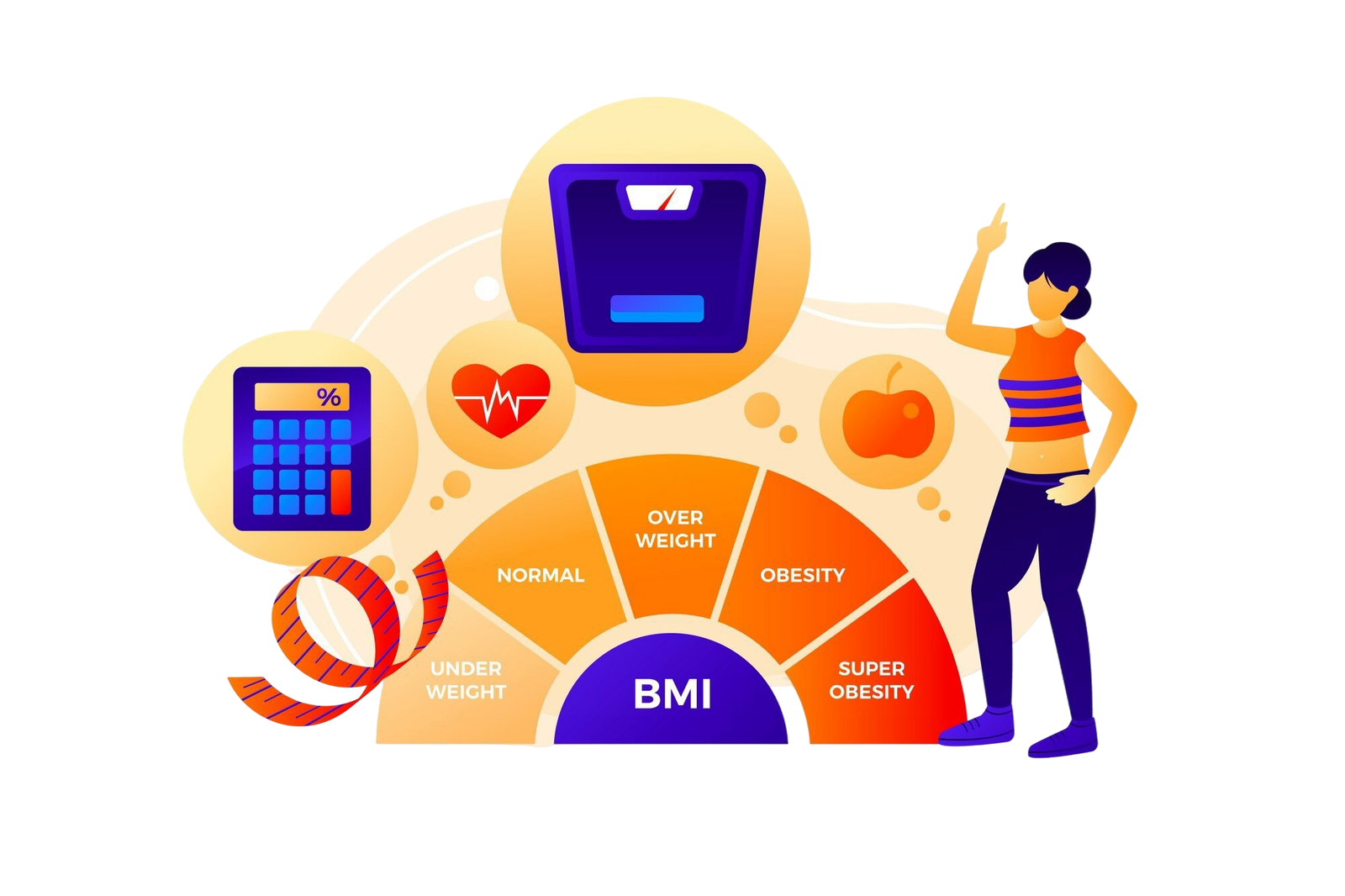
A body BMI calculator for male adults uses the same basic formula as other adult BMI calculators: weight divided by height squared. Men do not need a separate male-only equation.
For US adults age 20 and older, the standard healthy-weight BMI category is 18.5 to less than 25. BMI is a screening measure, however—not a direct measurement of body fat or a complete assessment of health.
Use CalculatorPace’s BMI calculator to calculate your number, then use this guide to understand its meaning and limitations.
How to Calculate BMI for Men
BMI stands for body mass index. It describes body weight relative to height.
The basic adult calculation requires height and weight. Age and sex do not change the standard adult BMI equation.
Metric formula
BMI = Weight in kilograms ÷ Height in meters²
For a man who weighs 82 kg and is 1.80 m tall:
BMI = 82 ÷ (1.80 × 1.80)
BMI = 82 ÷ 3.24
BMI ≈ 25.3
The BMI falls in the standard overweight category. That classification alone does not explain how much of his weight is muscle or fat.
If height is recorded in centimeters, divide by 100 first. A height of 180 cm is 1.80 m.
US customary formula
BMI = 703 × Weight in pounds ÷ Height in inches²
For a man who weighs 180 lb and is 5 feet 10 inches tall:
Total height = (5 × 12) + 10 = 70 inches
BMI = 703 × 180 ÷ (70 × 70)
BMI ≈ 25.8
The factor 703 is the conventional rounded conversion factor used in this formula.
Using a male BMI calculator correctly
Measure your height without shoes and use a current weight measurement. Follow the unit labels shown by the calculator.
Check that you have entered:
- Pounds or kilograms in the appropriate weight field.
- Total inches, separate feet and inches, or metric height as required.
- Height rather than waist circumference.
Do not enter 5 feet 10 inches as 5.10 feet. If a tool requests decimal feet, the equivalent is approximately 5.8333 feet.
A gender field is not necessary for the basic adult BMI number. If a calculator requests additional information, check whether it is used for another result or a different interpretation method.
BMI Chart for Adult Men
The standard adult categories below apply to men and women. This guide follows the US CDC framework for adults 20 and older.
| BMI category | Exact interval | Common one-decimal shorthand |
|---|---|---|
| Underweight | Below 18.5 | Below 18.5 |
| Healthy weight | 18.5 to less than 25 | 18.5–24.9 |
| Overweight | 25 to less than 30 | 25.0–29.9 |
| Obesity | 30 or higher | 30.0 or higher |
The obesity category is further divided into:
- Class 1: 30 to less than 35.
- Class 2: 35 to less than 40.
- Class 3: 40 or higher.
These are screening categories, not judgments about appearance, fitness, or personal worth.
Why rounding matters
A displayed result can round across a category boundary. For example, an underlying BMI of 24.96 rounds to 25.0 at one decimal place but remains below 25 before rounding.
Near a boundary, check how the calculator assigns its category and confirm that the measurements are accurate. Small differences do not replace a broader health assessment.
How to Interpret Your BMI Result
Begin with the category, then consider the circumstances behind it.
A BMI outside the healthy-weight category can be a reason to review your health with a professional. It does not independently diagnose a disease or determine the right weight-management plan.
Likewise, a BMI within the healthy-weight category does not establish that every aspect of your health is satisfactory.
A more complete assessment may consider:
- Weight history and recent changes.
- Muscle mass and physical function.
- Waist measurement and fat distribution.
- Blood pressure.
- Blood glucose and cholesterol.
- Medical history, medications, and health behaviors.
There is no single BMI number that every man should try to reach.
Muscle Mass, Body Fat, and BMI
BMI uses total body weight. It cannot separate muscle, fat, bone, and other tissues.
A muscular man may have a BMI in the overweight category even when excess body fat is not the main explanation. That does not make BMI meaningless, but it limits what the number can tell him.
The reverse is also possible: a man can have a healthy-range BMI while carrying relatively high body fat or having low muscle mass.
BMI vs. body-fat percentage
| Measure | What it describes | What it cannot establish alone |
|---|---|---|
| BMI | Weight relative to height | Fat percentage, muscle mass, or fat location |
| Body-fat percentage | The proportion of body weight estimated or measured as fat | A complete picture of health or fitness |
| Waist measurement | Information about abdominal size and fat distribution | Total body composition |
A BMI of 24 does not mean 24% body fat. Methods used to assess body composition also have limitations and should be interpreted appropriately.
Waist measurements can add useful information, but thresholds and interpretation may vary with clinical guidance and individual background.
Does Age Affect BMI in Men?
Age does not appear in the standard adult BMI formula. A 40-year-old man and a 60-year-old man with the same height and weight have the same calculated BMI.
Age can still affect interpretation. Body composition, muscle strength, and health circumstances may change over time, even if BMI remains similar.
Standard adult categories do not automatically change at each birthday. An online “BMI by age” chart may show population comparisons or a separate reference model rather than the standard category system.
For older men, unintentional weight loss, reduced strength, and nutritional concerns deserve attention regardless of BMI.
For US readers ages 18–19: CDC uses age- and sex-specific BMI interpretation through age 19. Do not rely on this adult chart alone for that age group.
When Should You Talk to a Healthcare Professional?
Consider discussing your result if you have unexplained weight changes, concerns about muscle loss, a BMI outside the healthy-weight category, or a result that seems inconsistent with your body composition.
Professional guidance is also useful when a medical condition, medication, or difficulty measuring height or weight affects interpretation.
A healthcare professional or registered dietitian can help assess the wider picture and identify appropriate next steps. Avoid making major dietary changes solely to move into a different BMI category.
Frequently Asked Questions
What is a healthy BMI for a man?
For adults age 20 and older, the standard healthy-weight category is 18.5 to less than 25. It is a screening range rather than a guarantee of health or an individual target.
Is BMI different for men and women?
The standard adult formula and categories are the same. Body composition and health-risk interpretation can differ, but there is no separate basic adult male BMI equation.
What is a good BMI for a 40-year-old man?
The standard adult categories still apply at age 40. No single number is ideal for every man; muscle mass, waist measurement, medical history, and other findings matter.
What is considered overweight for men?
The standard adult overweight category is 25 to less than 30. BMI does not determine whether the additional weight comes mainly from fat or muscle.
Does lifting weights make BMI inaccurate?
Lifting weights does not change the formula. Increased muscle can raise BMI, making it less informative about body fat. Review the number alongside body composition and other health indicators.
Can I have excess body fat with a healthy BMI?
Yes. BMI cannot identify body-fat percentage or distribution, so a healthy-range result can coexist with excess fat or low muscle mass.
Does BMI tell me how many calories to eat?
No. BMI classifies weight relative to height. Calorie needs depend on additional factors, including body size, activity, and individual circumstances.
Is a lower BMI always better?
No. A lower number is not automatically healthier. Underweight, unintentional weight loss, and loss of muscle can also warrant assessment.